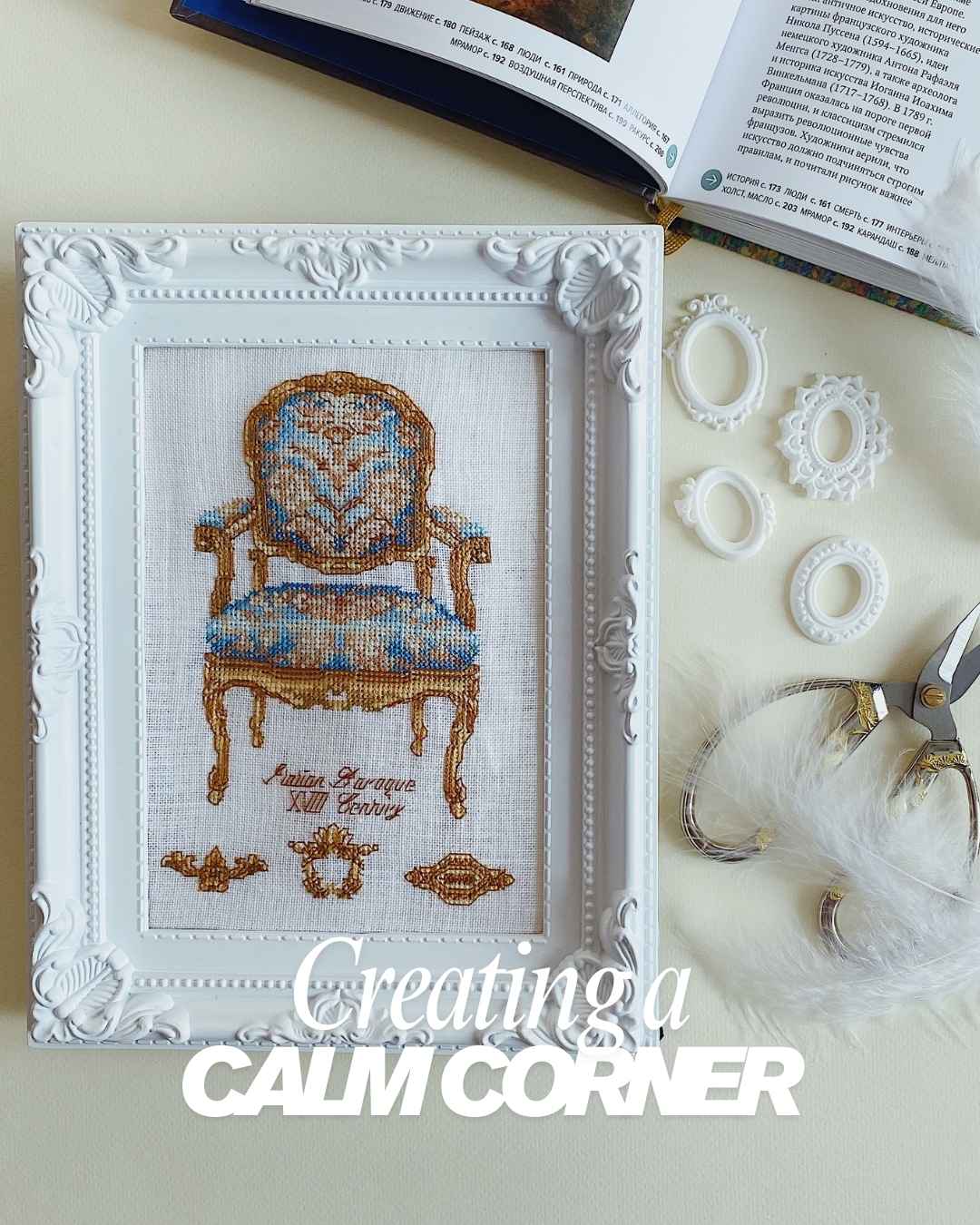
A practical, lived-in guide to making your stitching space soothing instead of stressful.
Owning needlework supplies is very different from having a space that quietly invites you to sit and stitch. A calm corner is not about perfection or aesthetics. It is about removing friction. When starting is easy you stitch more, and when you stitch more you relax more. Funny how that works. (Here is why cross stitch is such a good de-stresser.)
This guide covers simple setups, tools that earn their place and small habits that make picking up your project feel like relief instead of another chore.
1. Pick a Spot That Asks Nothing of You
A calm corner need not be a whole room. A chair, window seat or end of the sofa will do. Consistency matters most. Look for:
- Good natural light, or room for a reliable lamp
- Somewhere you already sit comfortably
- Little foot traffic, so you are not forever packing up
If you have to drag supplies out every time, your brain starts negotiating, and negotiation is the enemy of calm.
2. Keep Projects “Open”
One of the most underrated stressors is reopening a project: rummaging in bags, untangling floss, remembering where you stopped. Small annoyances add up. Instead:
- Keep one active project fully accessible
- Fabric mounted or neatly folded
- Needle parked in a needle minder
- Chart already marked, or open in Pattern Keeper
You should be able to start stitching within a minute of sitting down.
3. Choose Gentle Containers
Hard plastic bins shout “storage”. Soft containers whisper “this is safe here”. Good choices:
- Fabric baskets
- Zippered project bags with some structure
- Small wooden or fabric boxes for tools
Clear containers are practical, but opaque ones reduce visual noise. You do not need to see everything at once. Calm is selective blindness.
4. Limit Your Tools
More tools do not mean more peace. Your corner needs:
- A small pair of scissors you enjoy using
- A needle threader (even if you swear you do not need one)
- A needle minder
- One good pen or pencil for marking your chart
Everything else can live elsewhere. If you are shuffling tools to make room, the space is doing too much. Unsure what is essential? See Cross Stitch Essentials.
5. Floss Storage to Suit Your Personality
There is no moral high ground in bobbins or floss drops. Calm comes from systems that do not annoy you.
- Like things lined up neatly? Bobbins may help.
- Hate winding floss? Floss drops or bags are your friends.
- Need to see colours together? Group by project, not number.
The right system is the one you do not resent. More tips in selecting thread for cross stitching.
6. Light That Does Not Make You Squint
Good lighting changes everything. Ideally:
- A warm but bright lamp
- An adjustable angle
- Positioned so shadows fall away from your work
If you keep shifting your project to catch the light, your body never settles. Calm needs physical ease.
7. Comfort Is Not Optional
If your shoulders tense whenever you stitch, the corner is not calm. Consider:
- A small cushion or armrest
- A footstool for relaxed posture
- A project stand if holding fabric strains your hands (or try a hoop)
This is not indulgence, it is maintenance.
8. Add One Quiet Pleasure
Just one. Perhaps:
- A candle you light only when stitching
- A mug that lives in the corner
- Soft background music, or deliberate silence
The brain learns cues, and repeating them makes calm automatic. It is mindfulness by habit. Read more in Mindful Crafting.
9. End Sessions Gently
Do not just abandon your project. Take 30 seconds to:
- Park your needle
- Smooth the fabric (and take it out of the hoop)
- Tuck everything back where it belongs
This tiny ritual is a gift to Future You, who deserves kindness.
Final Thought
A calm corner is not about how it looks to others. It is about how it feels when you sit down after a long day and your hands remember what to do before your brain can complain. If your setup makes you want to stitch, it is working.
Stock Up on Your Stitching Essentials
Everything you need for your next project, from hoops and scissors to needles and more.
Ready for a new project? Try one of our beginner cross stitch kits.



Leave a Reply