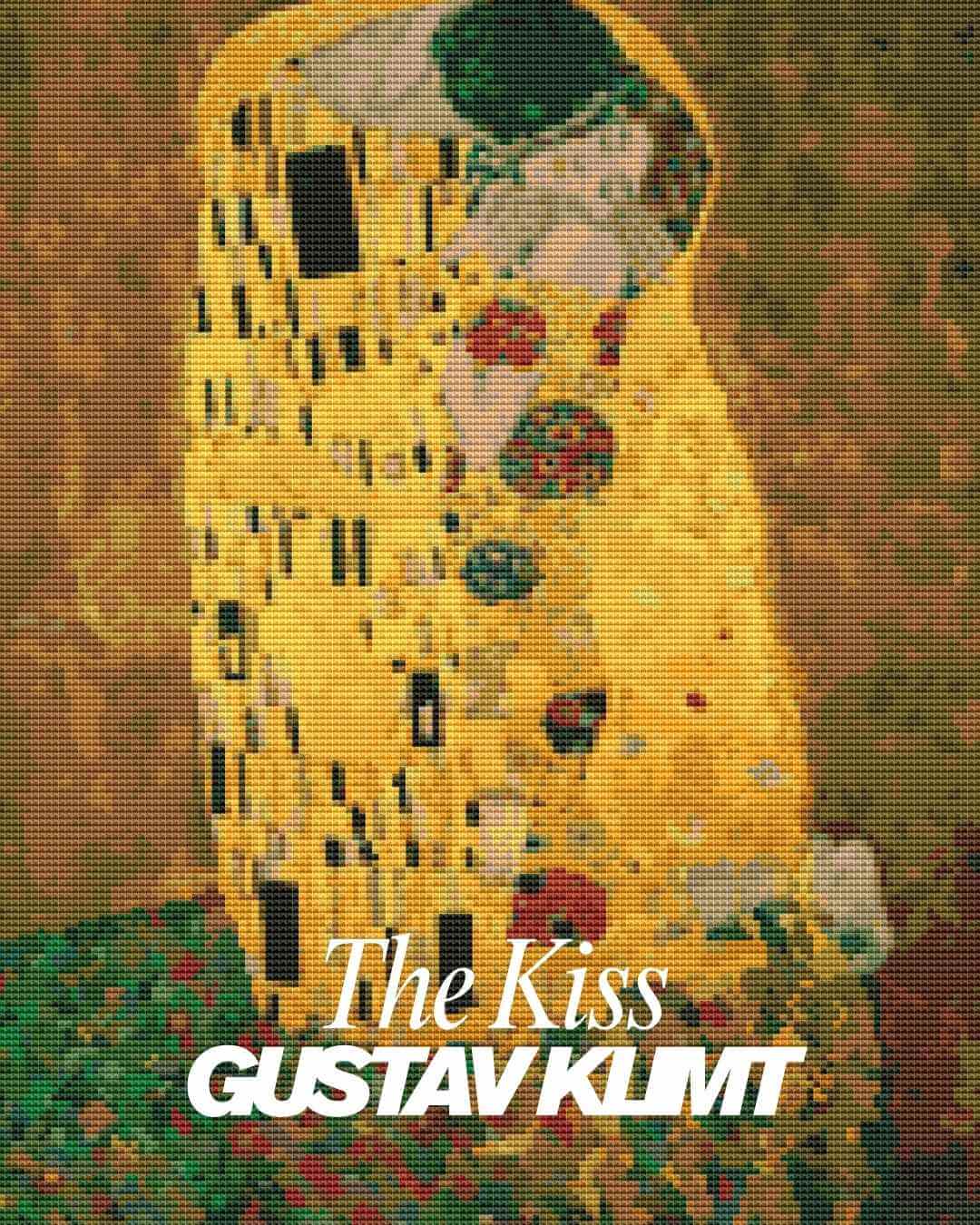
Nothing says eternal passion like two people wrapped in what looks like a very expensive, possibly itchy gold blanket. Gustav Klimt’s The Kiss (1907 to 1908) is both wildly extravagant and deeply human. It has appeared on dorm posters, gift-shop mugs and the odd questionable shower curtain, but underneath the fame is a painting that helped shape modern art.

The Golden Phase
Klimt made it during his “Golden Phase”, the artistic version of a chef discovering salted caramel and cooking nothing else for a while. Inspired by the glittering Byzantine mosaics he saw in Ravenna, Italy, he layered the canvas with real gold leaf until it glowed like a holy relic. His father was a gold engraver, so gold was in his blood.
The gold is more than a flex. Klimt uses it to dissolve the line between the lovers and their surroundings. Everything floats in a dreamy, ornamental haze where time politely stops eavesdropping.
Opposites Joined
Look at the robes. The man’s is covered in bold black and white rectangles, angular and almost industrial. The woman’s swirls with soft circles and colourful flowers. These contrasts are no accident: Klimt was fascinated by the union of opposites, masculine and feminine, reason and emotion. Two people, two visual languages, one moment when everything finally agrees.
A Flowered Edge
The couple kneel on a meadow of flowers that ends abruptly, a floral cliff that would fail any structural survey. It suggests this is not a real place but an emotional landscape you wander into only when life lets you feel something unfiltered. Some see a hint of danger too: love on the edge.
Check Her Feet
A detail often missed: the woman’s feet are curled, her toes gripping the edge of the flowers. Is she surrendering to the moment, or bracing herself? Her eyes are closed and her hand rests on his. She is not simply adored but an active part of the embrace. Klimt’s women were never accessories; they have their own gravity.
A Quick Success
When The Kiss was shown at the 1908 Kunstschau exhibition in Vienna, it was such a hit that the Austrian state bought it immediately, at a time when some of Klimt’s other work was seen as scandalous. Today it is the crown jewel of Vienna’s Belvedere museum, glowing in a dim room as crowds gather around it.
Why It Still Captivates
For all its gilded drama, The Kiss works because it captures something universal: the sliver of time when two people connect so fully that the world goes soft at the edges. Klimt did not paint love as tidy or polite but as overwhelming, luminous and maybe a little dangerous, which is how it feels when it is real.
See another golden Klimt masterpiece in Portrait of Adele Bloch-Bauer I.
Stitching The Kiss
All that gold, pattern and colour make a spectacular cross stitch and a romantic gift for anniversaries or weddings. For extra shimmer, add metallic threads or beads. See why cross stitch makes the perfect gift.
Stitch the Masterpiece Yourself
Our Premium kits recreate the world’s greatest masterpieces in thread, with everything you need in the box.
Start with The Kiss kit, or explore the Gustav Klimt collection.

Leave a Reply