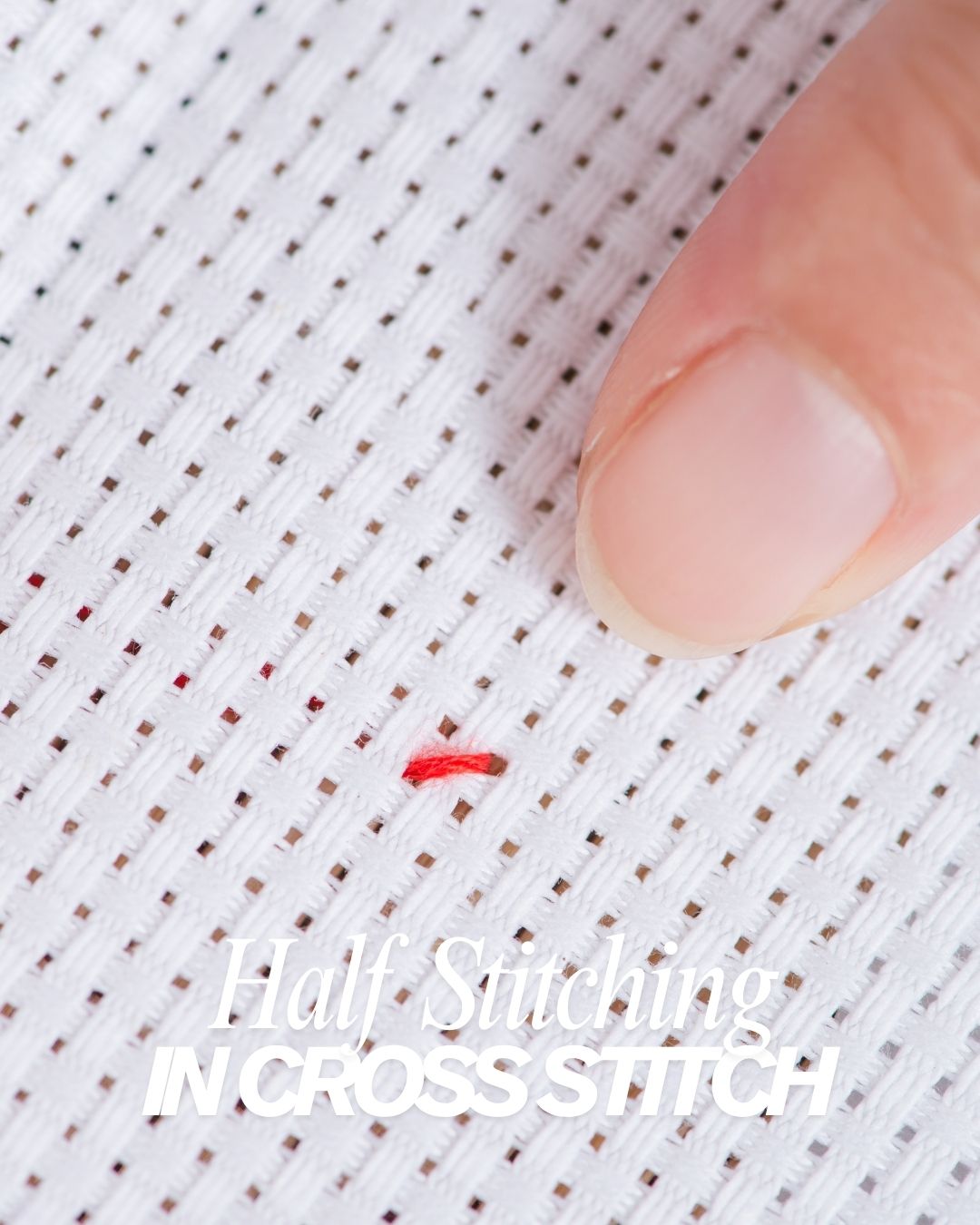
A half stitch is just what it sounds like: one diagonal leg of a cross stitch rather than the full “X”. It is a simple technique, but a surprisingly versatile one for adding shading, softness and texture to a design.
How to Make a Half Stitch
- Bring the needle up from the back at the bottom-left corner of the square.
- Take it down at the top-right corner to make a single diagonal stitch.
- Come up at the bottom-left corner of the next square and repeat.
Always slant half stitches the same way as the bottom leg of your full crosses so everything looks consistent. On the back you will see short vertical stitches.
If that sounds familiar, it is because half stitches are the first pass of the Danish method. Stitch back across the row and you have full crosses.
Half, Quarter and Three-Quarter Stitches
Do not confuse half stitches with fractional stitches:
- Half stitch: one full diagonal across the square.
- Quarter stitch: from a corner to the centre of the square.
- Three-quarter stitch: a half stitch plus a quarter stitch, often used for smooth curves and edges.
Check your chart key, because each type usually has its own symbol.
When to Use Half Stitches
- Shading and depth. Half stitches cover less fabric, so colours look lighter. They suit skies, shadows and backgrounds that should recede.
- Soft backgrounds. A field of half stitches adds colour without the bulk of full crosses, so the main design stands out.
- Texture. Mixing half and full stitches adds variety, which helps with fur, feathers, foliage and water.
- Blending. Some designers lay half stitches of one colour over full stitches of another for subtle blends.
Tips for Half Stitching
- Use the right number of strands. Many designs use one strand for half stitches to keep them light. Check your chart and see how many strands to use.
- Keep tension even. With less thread on the surface, uneven tension shows more. Aim for stitches that lie flat without pulling.
- Watch the back. Avoid carrying thread across large gaps, as it can show through lightly covered areas. See mastering thread endings.
- Practise first on a scrap of fabric if the technique is new to you.
- Use them for beads. A half stitch is exactly how beads are attached. See beading in cross stitch.
Finishing Touches
Half stitches pair beautifully with backstitching, which adds crisp outlines over softly shaded areas. Together they give a design real dimension.
In Conclusion
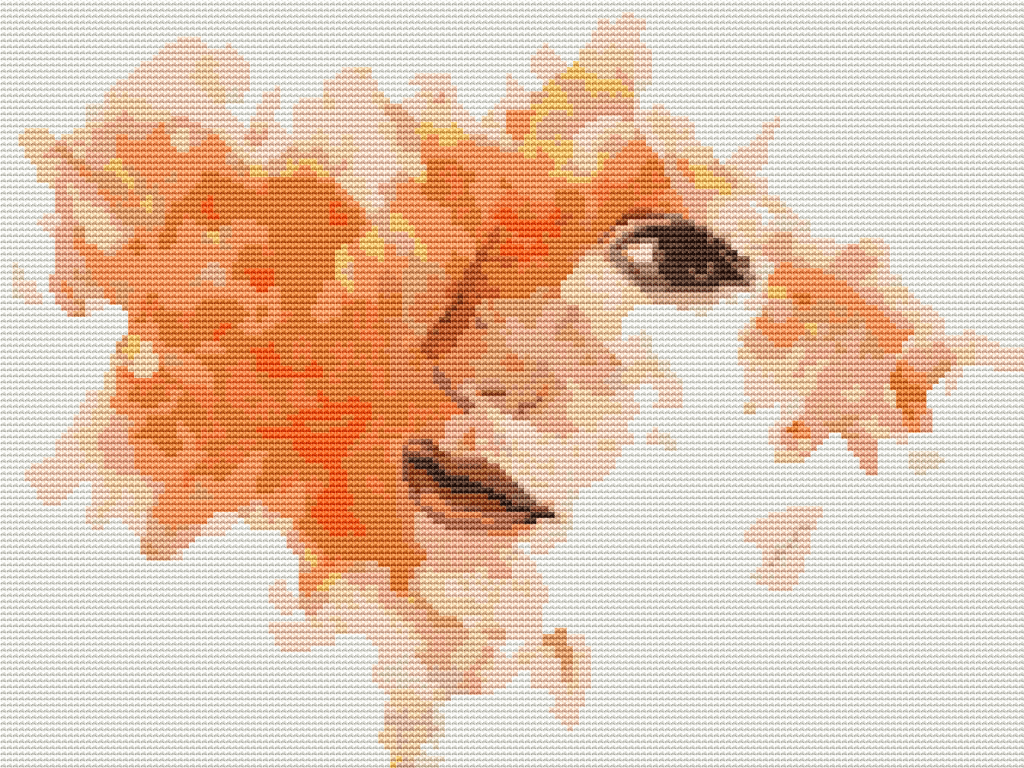
Half stitching is simple but full of creative potential. Once you are comfortable with it, you will notice it in many detailed charts, especially fine art reproductions, where it helps capture light and depth. For more technique help, see our top 10 tips for beginners, or see half stitches at work in our detailed premium designs.
Put It Into Practice
Choose a design that suits your skill level and start stitching today, with everything you need in the box.
Short on time? Try a mini cross stitch kit, or browse our cross stitch patterns.


Leave a Reply