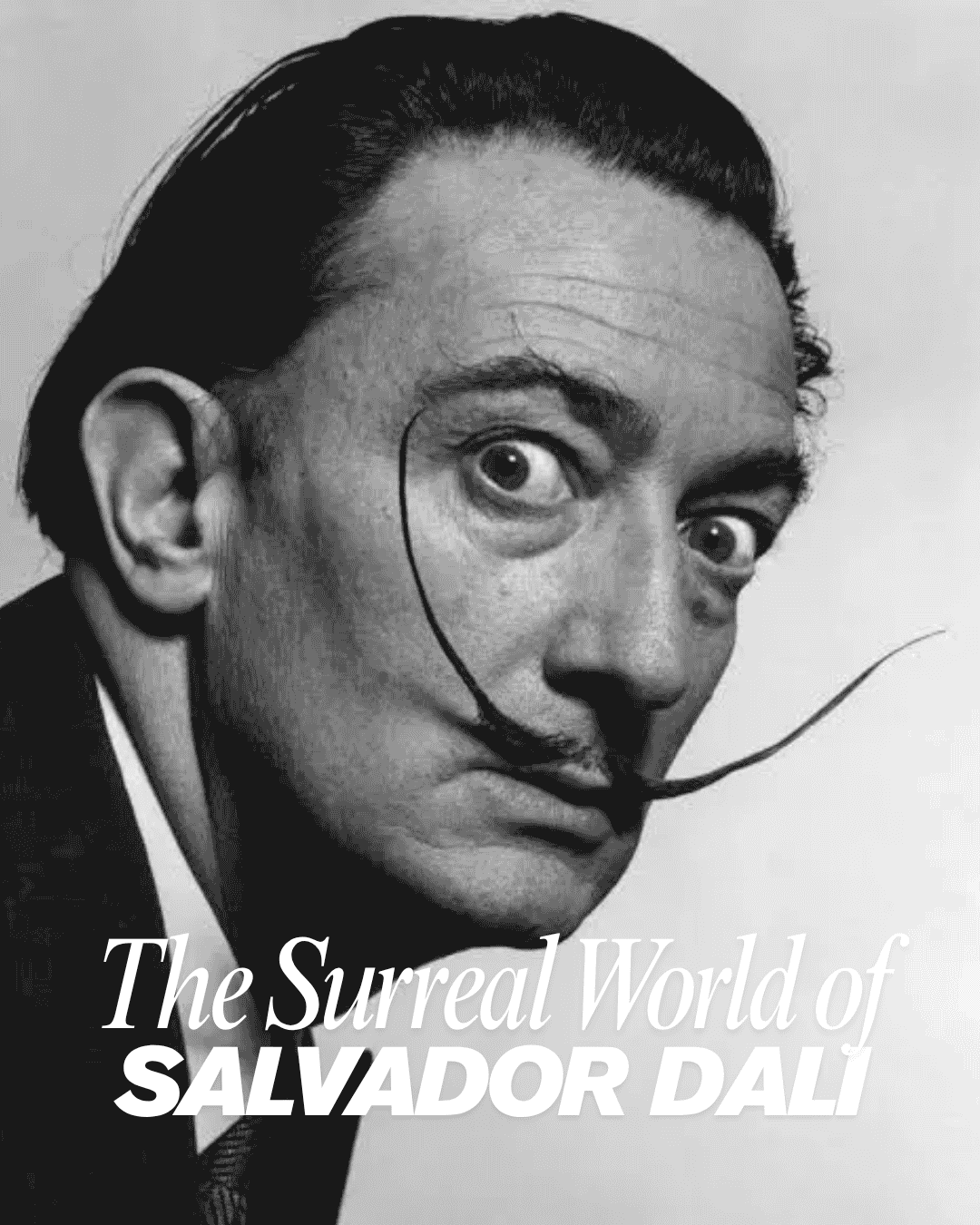
Some artists paint pretty pictures. Others quietly study emotion and form. Then there is Salvador Dalí, who decided reality was optional and behaved accordingly.
If you have ever seen melting clocks and wondered “Who hurt this man?”, congratulations: you have met Dalí.
First, the Moustache
Before the art, we must address the situation on his face. Dalí’s moustache was not just facial hair but architecture, pointing upward with ambition. He said it was inspired by the 17th-century Spanish painter Diego Velázquez, but Dalí took it from elegant to “this might take flight”.
He treated his whole appearance as performance art, which says plenty about how his mind worked.
The Mind Behind the Madness
Dalí was born in Figueres, Catalonia, in 1904, and things got strange early.
- He was named after his older brother, also Salvador, who died nine months before he was born.
- According to Dalí, his parents took him to his brother’s grave and said he was the reincarnation.
Identity issues were installed at startup. It may explain a life spent blurring reality, dreams and whatever the subconscious was doing at 3 a.m.
Dreams, but Unsettling
Dalí became a leading Surrealist, which is what happens when artists decide logic is overrated.
His best-known work, The Persistence of Memory (1931), has those iconic melting clocks. They do not symbolise “time management struggles”, though that would be relatable. Dalí said the idea came after dinner while he pondered a Camembert melting in the heat. One of history’s most famous paintings may exist thanks to soft cheese. You are welcome.
He Loved Lobsters
Dalí had a thing for lobsters, not only eating them but featuring them.
- He worked with designer Elsa Schiaparelli on the famous lobster dress (1937).
- He made a Lobster Telephone (1938), because ordinary phones are too predictable.
It was not random: he linked lobsters with desire and the absurd, which is a very Dalí way of saying, “I like this odd thing and now it matters.”
Ants, Eggs and Recurring Chaos
Dalí reused certain symbols again and again:
- Ants: decay and death
- Eggs: life, hope and rebirth
- Crutches: human weakness and the need for support
He built his own visual language. Learn it and the paintings stop feeling random and start reading like coded messages from an eccentric brain. For more hidden meanings in famous works, read The Mysteries of the Art World.
Hollywood, but Stranger
Dalí did not stop at painting. He worked with filmmaker Luis Buñuel on the surreal short Un Chien Andalou (1929), whose imagery still unsettles people.
He also worked with Walt Disney on the short animated film Destino, begun in 1945. It was shelved and only finished by Disney in 2003. Yes, the studio behind Mickey Mouse teamed up with the man obsessed with melting clocks. Reality remains confusing.
Gala: Muse, Manager, Chaos Coordinator
Dalí’s wife, Gala, was central to his life and work. She:
- managed his career and business affairs
- inspired and appeared in many of his paintings
- kept his genius from drifting off into space
Their relationship was unconventional, intense and by most standards complicated, but it worked for them, which is more than most can say.
Attention Over Art?
Dalí did not just want to be a great artist; he wanted to be famous. He:
- gave bizarre interviews
- made outrageous public appearances
- lectured at the 1936 International Surrealist Exhibition in London in a diving suit and nearly suffocated, because commitment matters
Critics said he turned too commercial later in life. Dalí’s reply was essentially: “Correct. And?”
His Final Masterpiece: Himself
Dalí did not just make art, he was the art. His whole life, from moustache to statements to paintings, was one long performance about imagination, ego and pushing boundaries.
Why He Fascinates
It is not just the weird imagery but the way he treated reality as flexible.
- He turned dreams into detailed, nearly photographic images.
- He made the irrational feel oddly logical.
- He blurred genius and spectacle so completely you cannot separate them.
Dalí makes you accept an uncomfortable thought: maybe reality is not as stable as we pretend.
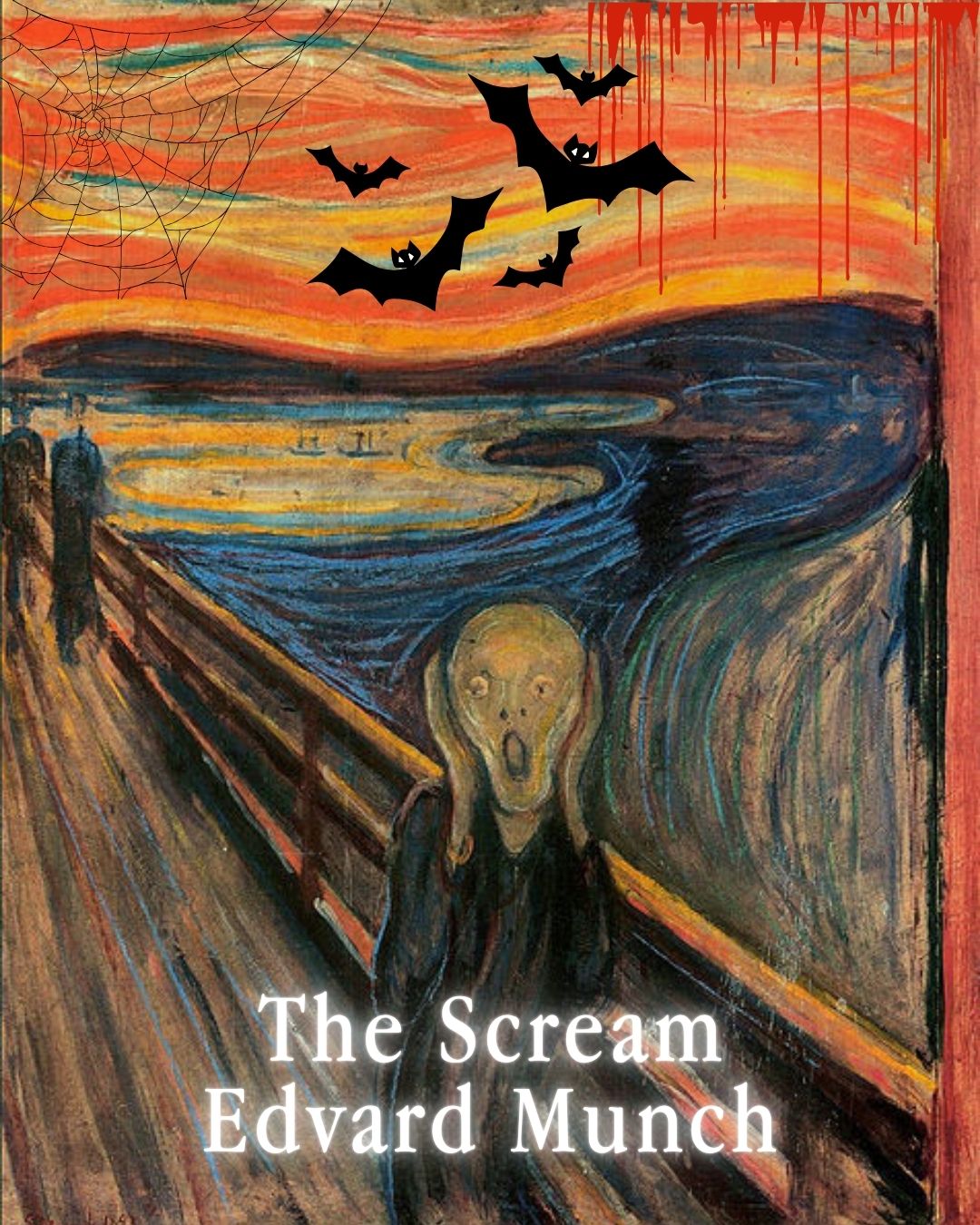
Love art that unsettles a little? Read the story of The Scream by Edvard Munch and The Desperate Man, or meet the cat who became a legend in Le Chat Noir.
Stitch the Masterpiece Yourself
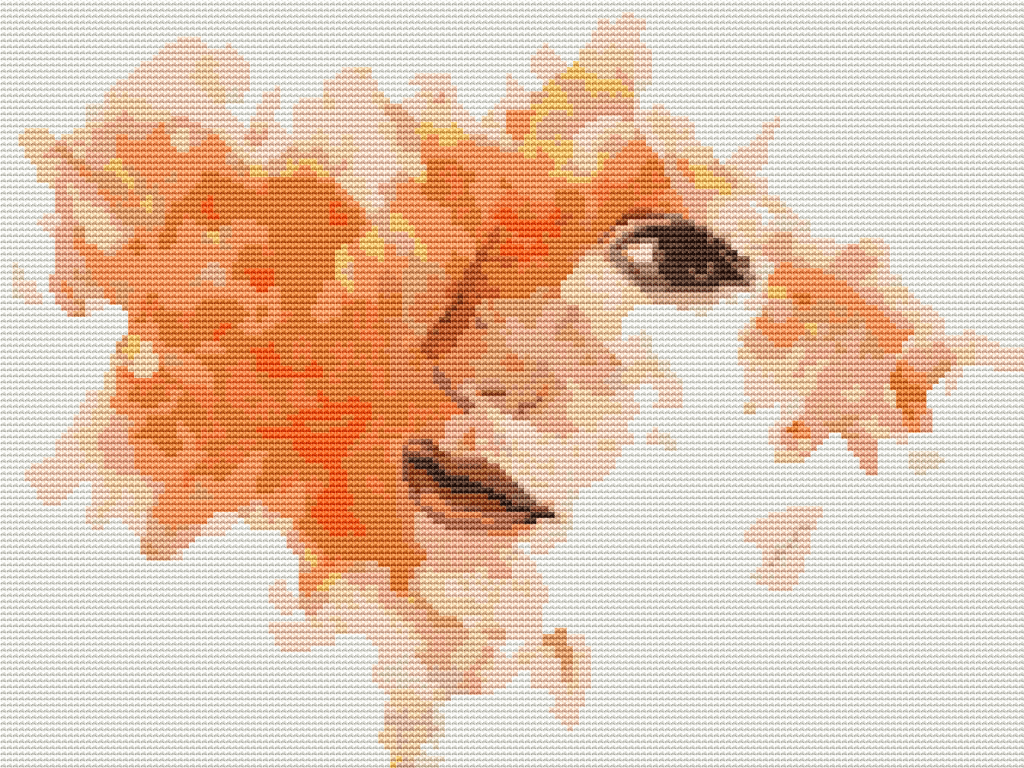
Our Premium kits recreate the world’s greatest masterpieces in thread, with everything you need in the box.
Shop Salvador Dalí Cross Stitch
Explore Salvador Dalí in cross stitch, or browse more Premium kits.


Leave a Reply