
When you start a cross stitch project, two small decisions shape the result: the fabric count and the number of floss strands. Get them right and your stitches will be full, smooth and even. Here is a simple guide.
What Is Fabric Count?
Fabric count is the number of stitches that fit in one inch of fabric. On Aida it is the number of squares per inch, and on evenweave and linen it is the number of threads per inch. Common Aida counts are 11, 14, 16 and 18.
The higher the number, the smaller the stitches, and the more detailed (and smaller) the finished design. 14-count gives larger, easy-to-see stitches, while 18-count allows finer detail.
Evenweave and Linen: Stitching “Over Two”
Evenweave and linen have much higher counts, such as 28 or 32, because you usually stitch over two threads rather than one. So 28-count evenweave stitched over two gives the same stitch size as 14-count Aida. Compare the fabrics in Aida vs evenweave and linen.
Working Out the Finished Size
Divide the number of stitches in the design by the fabric count. A design 140 stitches wide on 14-count is 10 inches wide, and on 18-count it is about 7.8 inches. Then add at least 3 inches on every side for framing.
How Many Strands Should You Use?
Embroidery floss has six strands twisted together. You separate them and use only a few, depending on your fabric. As a general guide for full cross stitches:
- 11-count Aida: 3 strands
- 14-count Aida: 2 strands
- 16-count Aida: 2 strands
- 18-count Aida: 2 strands for full coverage, or 1 for a lighter look
- 28-count evenweave (over two): 2 strands
- Over one on high counts (such as 22 and above, or 28 over one): 1 strand
One Strand: Fine Detail
A single strand gives delicate, subtle stitches. It suits backstitching, half stitches, soft shading and miniature work on very fine fabric. It takes a steady hand and a little patience.
Two Strands: The Standard
Two strands are the usual choice on 14 to 18 count. They give a good balance of coverage and detail and suit most patterns.
Three or More: Bold and Textured
Three or more strands make richer, more textured stitches. That is great on 11-count or for special accents, but too bulky on higher counts, where stitches look crowded.
Variegated Floss
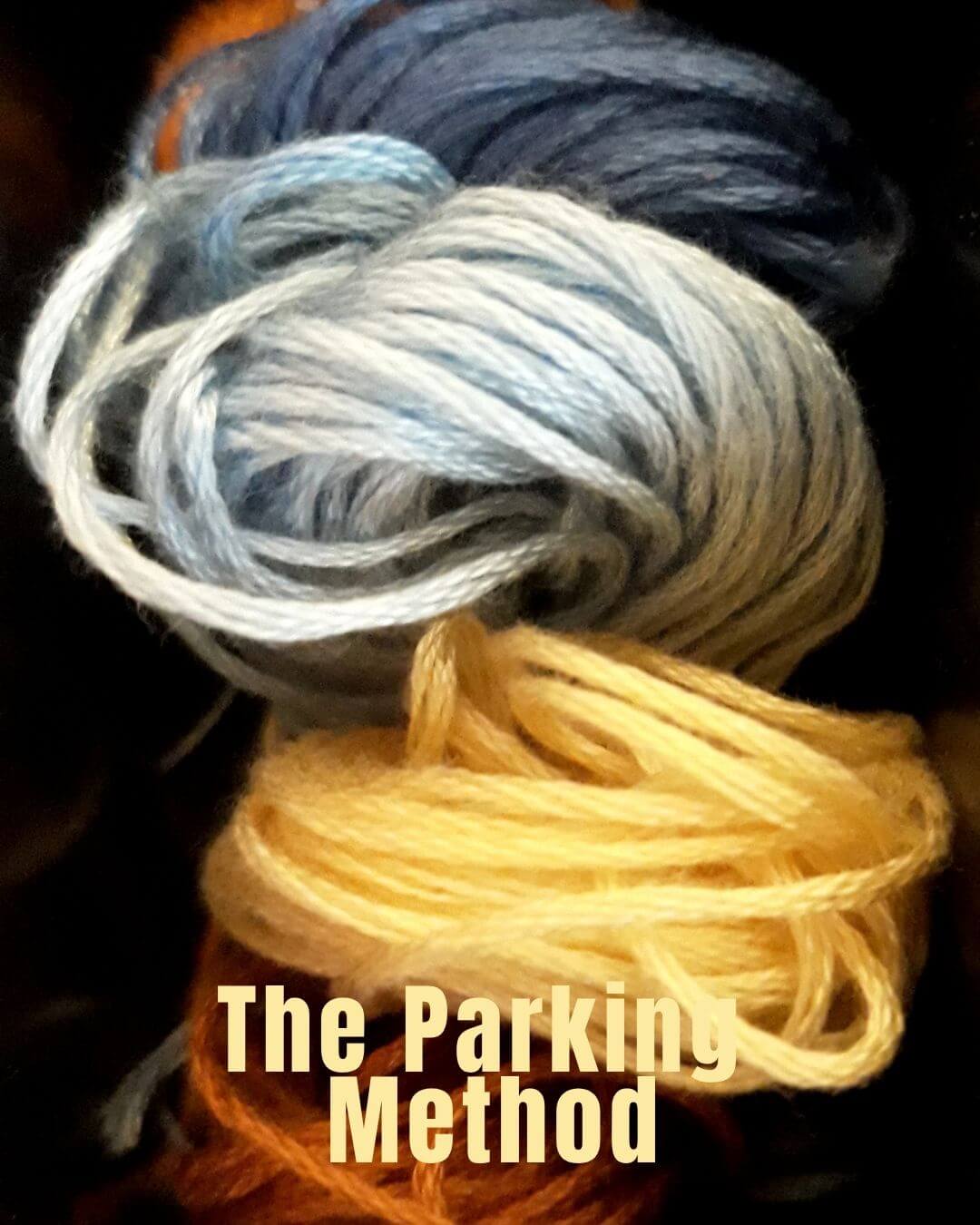
Variegated floss shifts colour along its length for a blended effect. Two strands usually work best, and finishing each cross before moving on, rather than working in rows, shows off the colour changes.
How to Separate Strands
Cut a length of about 18 inches. Pinch the top, then pull one strand straight up and out while the rest bunch below. Repeat for each strand you need, then lay them back together. Taking strands out one at a time helps them lie flat and cover better, and it prevents tangles. See preventing twists and knots for more.
Final Tips
- Check your chart first, since many designers state the number of strands.
- Stitch a small test patch if you are unsure about coverage.
- Match your needle to your fabric too. See choosing the best needles.
- Your own taste counts. There is no single right answer, so experiment until you love the look.
For the whole picture on supplies, read Cross Stitch Essentials: Choosing Fabric, Needles and Floss. Prefer not to work it all out yourself? Our cross stitch kits come with the fabric and threads already matched.
Stock Up on Your Stitching Essentials
Everything you need for your next project, from hoops and scissors to needles and more.
Ready for a new project? Try one of our beginner cross stitch kits.

Leave a Reply